
Wall vents are a common sight in every house. They all have different functions but are all used to ventilate or expel something from your home. The oven vent blows smoke out of your home, the laundry vent expel the steam and heat from the laundry and dryer to the outside. These vents are all of great importance and must be clear of any obstruction to be effective. This is why it can be such a serious issue when a wild animal, like a squirrel, accesses one of your vents and gets into the wall of your home. There they will make a nest and possibly give birth to babies which must be removed. These wall vents are perfect and easy access points for squirrels, who,m like rodents, have ever-growing incisors that can penetrate almost any building material from concrete to metal. The wall vents are a great way for them to access the house, they are often made of plastic or aluminum and can be warped and adjusted as needed for the animal to fit through. Plastic vents are rather easy to rip off the wall with some chewing and a little elbow grease, which are two things squirrels are very good at. They will get that vent off, or get through it, even if it takes days, even if it takes weeks. They are stubborn and they don’t give up.
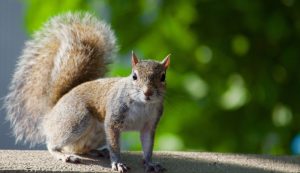 The best way to protect those vents is to exclude them. What is exclusion? It’s a catch-all industry term used by wildlife technicians for the sealing of entryways, or possible entryways that could allow animals or rodents into your home. You can also do this, all you need is a good drill with a bit for drilling into brick or whatever your home is made of, and a bit for drilling in bolts. You can use galvanized steel mesh which is waterproof to seal off almost any entryway that seems accessible and if you are handy with a ladder there is no end to what you can seal off. This is a great method to prevent them but what if they have already gotten into the house? There have been situations where squirrels have invaded a dryer vent and popped out to terrorize the family living in the home. Squirrels are not afraid to make themselves known in that way. Unlike most animals that invade homes, they do not hide. They are active during the day when humans are awake and they make a lot of noise. So when it comes to a squirrel in your home, it will not be hard to recognize.
In this case, if you can get on your roof and do work there without hurting yourself then this is something you can do yourself. However, there is very little you can do to get them out if you are unable to get up on the roof. Simply trying to climb up on the roof is dangerous enough, professional technicians need to spend weeks and even months learning how to use a tall ladder. If your home is a bungalow then you may be able to safely get on the roof but if it’s a 4-floor townhouse you may fall off and that kind of fall is something you want to avoid. So if the situation has gotten serious, if they are in the attic making babies and defecating everywhere and you need them out but cannot get up on a ladder then you can try calling a neighbour or a trades-person who can get up there. Of course, you could always call a wildlife technician.

