
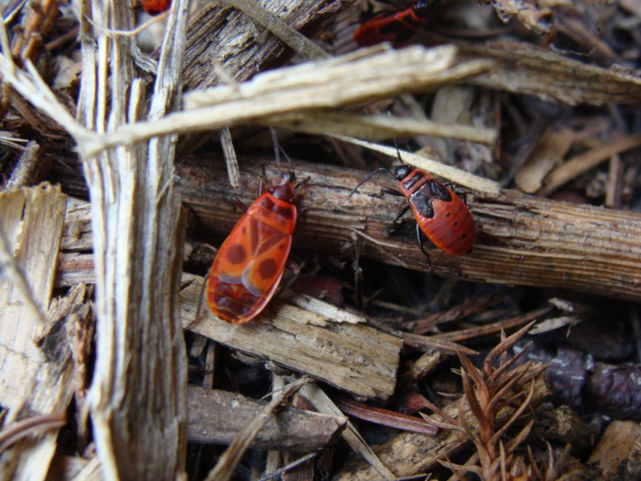
The chinch bug is a common predator of small plants in eastern Canada. They are often hairy chinch bugs which is a specific species. They make use of a flea like mouthpart that they use to extract sap from small plants like grass. If you have these bugs you will notice in June that your lawn is turning brown. Catch it early to resolve it without having to replace your entire lawn. The chinch bug looks black with white spots all over its back between its wings. Adults have white wings that can be folded but nymphs have no wings and are bright red which makes them easy to spot. As it grows and moults and transforms its carapace goes to brown and then black.
 They feed on the grass by sucking the sap out of the plant’s roots, killing it very quickly. The key to finding them is not searching the dead grass but the living grass directly beside it. This can be done with a coffee can, cut out the bottom and force it down onto some fresh grass near brown grass. Make sure it’s shoved down hard. Fill the can with water from a hose or jug and watch as the chich bugs float to the top. This will help you know how to sever the infestation is if more than a couple float to the top. If it’s more like twenty or more then you have a serious infestation that needs to be deal with very quickly. They prefer hot weather and will do their most destructive work at that time. It can easily be mistaken for sun damage but sun damage generally affects random spots. If the spots are frequent and with lines connecting them then they are not sun damage they are chinch bugs. If you walk on your lawn and smell a foul odour then you are smell crushed chinch bugs. They give off this odour to chase away predators but it also works to annoy humans. You can also spread the grass in various places to see the bugs and especially the nymphs which are bright red.
If you leave them to continue eating the sap till august then your lawn is doomed and you will have to have it commercially treated, dug up and re-soiled and seeded. Chinch bugs love a lawn that is poorly tended and ignored. The lawn will have compacted soils, thatch accumulation, and a lack of moisture or an excess of nitrogen. This can be a serious problem for your lawn on its own but add chinch bugs to that and you will have to work fast and hard to save your already dying lawn.
If your lawn is gone, destroyed and you have to replant then take the opportunity to plant natural pest-controlling grass-like ryegrass or an endophytic variety of tall fescue which are a natural fungus that kills lawn pests when they try to access the plant. Make sure to thoroughly aerate your lawn in the spring to reduce the compaction of the soil so the earth can breathe. This makes it very difficult for the chinch bugs to access the grass. Remove all thatch, organic debris of any kind including branches old grass leaves and other dead plants. This helps chich bugs kill your lawn. Over-fertilizing will draw chinch bugs to your grass because they like to live in a nitrogen-rich environment and over-watering just gives them dampness to help them survive the powerful heat. Water it thoroughly once a week in the summer and no more. Leave the grass a little longer than normal and sprinkle over the grass a mineral called agricultural limestone if the pH of the soil gets too acidic.
