
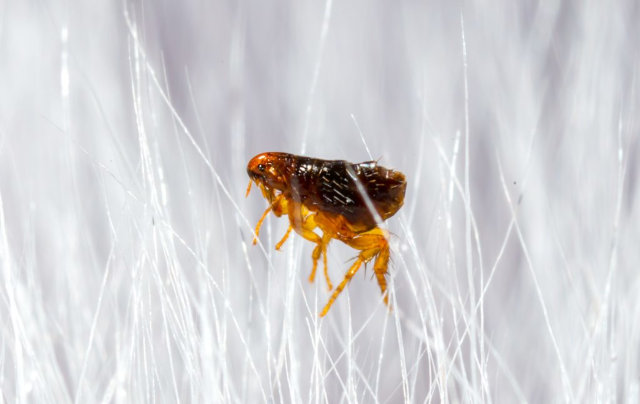
The flea is a very old insect from the very earliest days of mammalian evolution. They are blood-sucking parasites that mostly consume dead skin, but female fleas require a meal of blood to reach adulthood and then another before they can breed. Males need to consume a blood meal to reach adulthood as well but they do not need to drink blood to be sexually active. The females are the ones that truly need the blood meal to continue the species. If you have fleas in your home it’s more than likely that you have pets, however, that is not the only way to get fleas. Interacting with farm animals, wild animals, even the cute ones, and just travelling in the wilderness stepping through piles of leaves, sitting on the ground and just being around hundreds of animals in the treas is enough to get fleas on your clothes and then into your hair and on your skin. Fleas can reproduce rapidly as long as they have access to mammalian blood. The females can consume a blood meal and then produce eggs in less than two days. These eggs fall to the ground and will rapidly hatch in just twelve days into a larva that has no appendages but have very strong mouthparts for eating biomatter. It must do this until it is ready to enter the pupal stage. The pupal state takes much longer, as many as two-hundred days in the cooler months but in the hottest months, they can reach the pupa stage in just under a month. This is why fleas are so hard to control. The treatment needs to be everywhere to kill the eggs on the floor. They are often in thick carpeting or a pet bed inside the cushion to avoid dangerous UV light that can kill them. When they are ready they will spin a silk cocoon like most flying insects and will spend fourteen days transforming into a pupa. The pupa can drink a blood meal and needs to reach adulthood. They will lay in wait for a host and use their very long legs to leap massive distances, comparable to a human leaping over a tall building, and land on a host where they can use their tri-needle-like mouthparts to slice a cut in the flesh of an animal. They separate the flesh opening and then use their third central needle to pierce a vein. They will then use the other two to inject anticoagulants to stop the blood from clotting which would kill the flea by clogging its needle mouthparts. They will feed on a host immediately upon landing on them as they need to drink a blood meal within twenty-four hours to survive to adulthood from the Pupa stage. While they drink blood they spend most of their time on surfaces to avoid being killed by their host after the blood meal. They are not the most survivable insects and need a humid warm environment. The cold will kill fleas and eggs but once they have found places to nestle turning your heat off won’t be effective. The best options for dealing with fleas at home are the following.
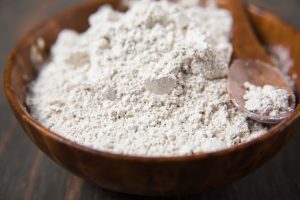 A spray bottle filled with water and a bit of dish soap sprayed directly on fleas will kill them in a short time as the soap dries and clogs the capillaries that allow them to take in oxygen through their carapace. You can also use a mix of vinegar and lemon juice with water and spray that on them which will kill both fleas and larva. Baking soda is also effective in killing off insects and their eggs but nothing is as effective in dealing with a flea issue as diatomaceous earth. This is a silica powder mined from ancient fossilized single-cell organisms. It is food safe and used in large-scale food storage so don’t worry, you have already been eating it your whole life. It is by far the safest and most effective pest management tool ever made. You can puff it into cracks and crevices and powder it like icing sugar over surfaces the fleas use. A puff or two over a surface with fleas will kill them in short order. Use this primarily with vinegar and lemon juice all over the house in every small crevice you can find and you will be able to eliminate your flea infestation.
